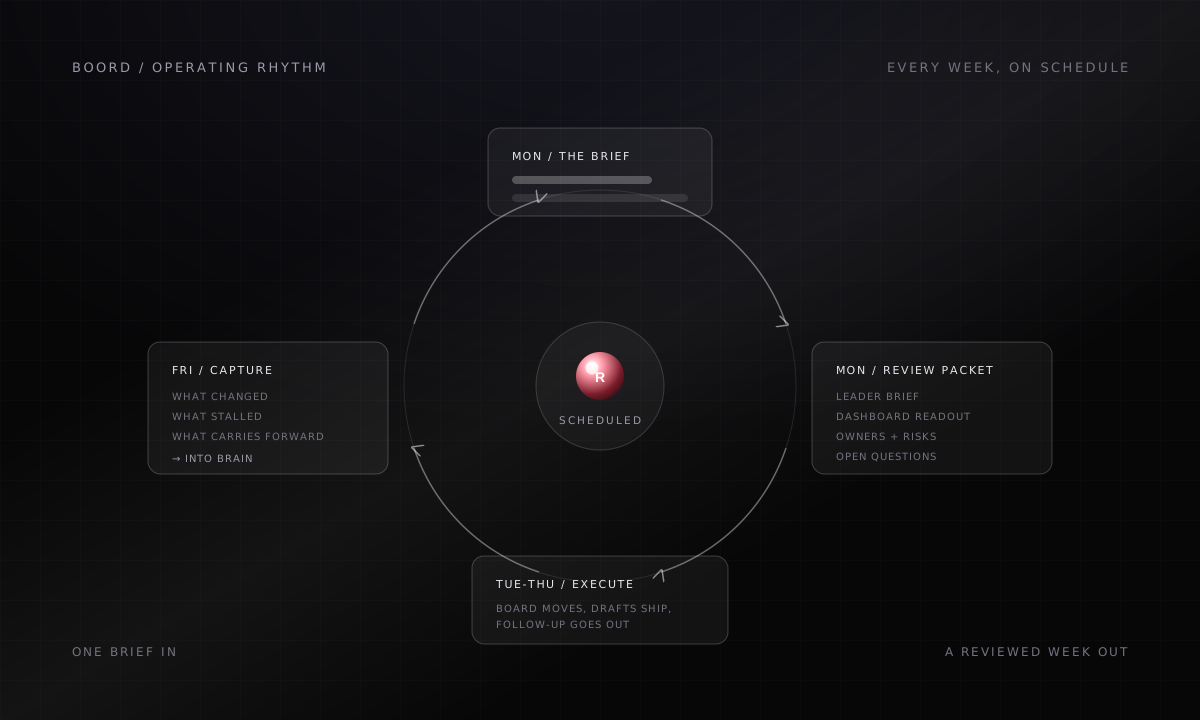
Every company has a weekly rhythm. In most of them it lives in one operator’s head, survives on their discipline, and dies the week they are busy.
Boord makes the rhythm a scheduled system. The Monday packet prepares itself from real state: the project board, the dashboard readout, last week’s decisions and open questions. Your job shrinks to the part that actually needs a leader: judgment.
Prep Monday's review. Big week: the portal launch landed, but support load doubled and I'm worried about the Fieldstone renewal.
Packet is ready. Launch results are in the readout, support load has a proposed owner, and Fieldstone is flagged with its full account context. One question from last week is still open: the hiring decision.
- Collected the week: board, metrics, decisions Done
- Drafted the Monday leader brief Done
- Scheduled: every Monday, 08:00 Done
Illustrative exchange. The schedule keeps running; outward messages still wait for approval.
The loop
- Monday
The brief
Your few lines of judgment on top of the state Boord already has: board, metrics, and last week’s questions.
- Packet
The review, prepared
Roma sets priorities and owners, Otto reads the numbers, Sumer writes the brief the team will read.
Roma Otto Sumer - Review
You run the meeting
Approve owners, answer or carry the open questions, and release the team note when the wording is yours.
Human decides - The week
Execution with a memory
The week runs on the board; Friday captures what changed.
- Priorities on the board
- Risks with owners
- Friday capture into Brain
- Next Monday, pre-loaded
The loop repeats every week on schedule. Friday's capture is what makes Monday cheap.
A packet, not a pile
The Monday packet is one readable object. Fictional example of what its readout might carry:
Otto: Support doubling right after launch is a docs problem before it is a hiring problem. The rollout guide fix is cheaper and testable this week.
Fictional numbers. The packet pairs every tile with a question and an owner.
What carries forward
The rhythm works because nothing resets. Each part of the packet has a memory behind it.
| Packet section | Where it comes from | What persists |
|---|---|---|
| Priorities | Roma, from the board and your brief | Owners and status, week over week |
| Readout | Otto, from the operating dashboard | The reasons behind each movement |
| Risks | Flagged during the week | Until resolved or explicitly accepted |
| Open questions | Last week’s packet | Until answered or closed, never dropped |
| Team note | Sumer’s draft, your wording | Sent only after your approval |
Start small
The rhythm does not require adopting everything at once. A brief and a readout on Monday is already a working loop; the board, follow-up, and Friday capture make it compound. Most teams find the open-questions list alone pays for the habit: it is where the expensive silences go to become visible.
Use-case FAQ
What goes into the Monday packet?
A leader brief in plain language, the dashboard readout with questions, priorities with owners, flagged risks, and the open questions carried from last week. All of it traceable to sources.
How much do I have to write each week?
A few lines: wins, misses, and what worries you. Boord already has the board state, the metrics, and last week's questions, so your brief is judgment, not bookkeeping.
Can the rhythm run without me on vacation weeks?
The packet still gets prepared on schedule and waits in the workspace. Anything that would leave the company, like a team-wide note, holds for approval until a human is back.
What happens to questions nobody answers?
They persist. An open question appears in every packet until someone answers it or explicitly closes it, so the uncomfortable questions stop dissolving between Mondays.