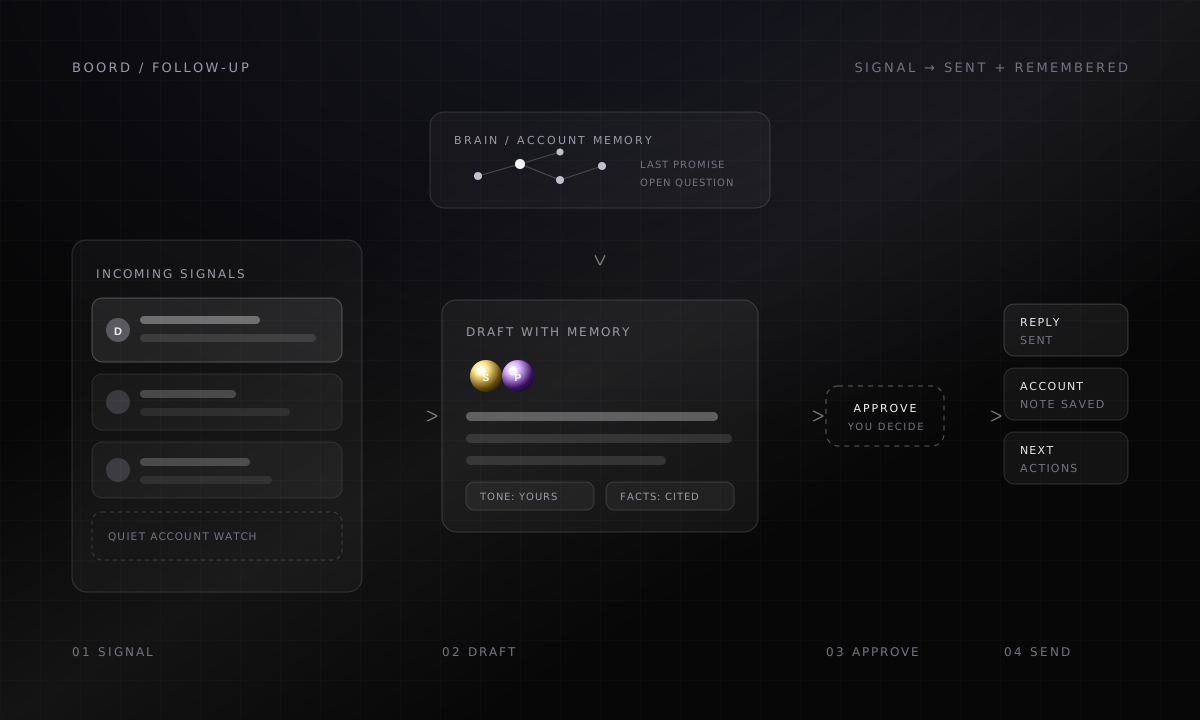
Customer follow-up fails in two boring ways. Either the reply goes out fast but ignores half the account story, or it waits three days while someone reconstructs the story from calls, notes, and inbox threads.
Boord removes the reconstruction. Every account has a story in Brain, the company memory: what was promised and when, what the customer asked last time, what is still open. When a signal arrives, the draft starts from that story instead of from a blank page.
Dana from Fieldstone replied. They want the rollout plan before Friday. Handle the follow-up?
Drafted it. The reply confirms Friday, restates the two-phase rollout we promised on the June call, and asks the one question still open on their side.
- Pulled Fieldstone history from Brain Done
- Drafted the reply with cited promises Done
- Send the reply to Dana Waiting for your approval
Illustrative exchange. No message leaves without your approval.
What one signal produces
A good follow-up is never just the message. Boord prepares the whole motion around it, so the account keeps moving after you hit approve.
The reply
Short, in your voice, grounded in the latest exchange and the promises already on record. Timing claims are checked against what was actually said.
The account note
What this exchange changed: the new commitment, the shifted date, the risk worth remembering. Written into memory, not into someone’s head.
Next actions
Who follows up, when, and why. If the customer said “ask me after the board meeting,” the reminder exists before you close the tab.
The operating signal
When three accounts ask the same question in a month, that pattern surfaces in the dashboard readout and the weekly review.
The loop, end to end
- Signal
Something happens
A reply lands, a call wraps, a deadline nears, or an account goes quiet for two weeks.
- Draft
Memory does the heavy lifting
Sumer drafts against the account story. Phoe sharpens the angle. Otto keeps the signals visible.
Sumer Phoe Otto - Approve
You read it first
Fix the tone, correct a fact, or reject the draft entirely. Corrections flow back into the account memory.
Human decides - Send
The account moves
The message goes out and the memory stays current.
- Reply sent
- Account note updated
- Next action scheduled
- Pattern fed to dashboards
The gate is the point: Boord prepares everything, and a human approves anything that leaves the building.
The quiet accounts
The most expensive follow-up is the one nobody sends. Boord can watch for silence: accounts with no touch in a chosen window get surfaced with their last context and a suggested check-in.
That turns “we should really reach out to them at some point” into a Monday list with drafts attached. You still decide who gets a message and what it says; the difference is that the decision happens before the renewal call, not after it.
The review discipline
| Account signal | Boord prepares | You confirm |
|---|---|---|
| Customer asked about timing | Reply citing the recorded promise | The promise is still accurate |
| Call ended with commitments | Account note and next actions | Owners and dates |
| Account went quiet | Check-in draft with last context | Whether to send, and the tone |
| Same question across accounts | Operating signal for the review | Whether it changes the plan |
Why memory changes the math
Without memory, every follow-up bears the full setup work of rebuilding context, so follow-up gets rationed. With the account story on tap, the marginal effort of one more thoughtful touch drops to a review-and-approve. Teams follow up more, and every message reads like it came from the person who knows the account best, because the memory it draws on is exactly that person’s notes.
Use-case FAQ
What context does Boord use for a follow-up draft?
The account's history in Brain: past conversations, promises and their dates, meeting notes, open questions, and anything your team recorded. The draft shows which facts it used.
Can Boord send messages on its own?
No. Outgoing messages are approval-gated. Boord drafts, you review and approve, then it sends. If a fact looks wrong, you fix it once and the account memory is corrected too.
How does Boord catch accounts going quiet?
You can ask Boord to watch for silence: accounts with no activity for a chosen period get surfaced with their last context and a suggested check-in, before the quarter ends and the renewal is a surprise.
Does this replace our customer records tool?
It works alongside whatever you keep today. Boord's contribution is the memory and the motion: context that survives between conversations, and follow-up that actually goes out.