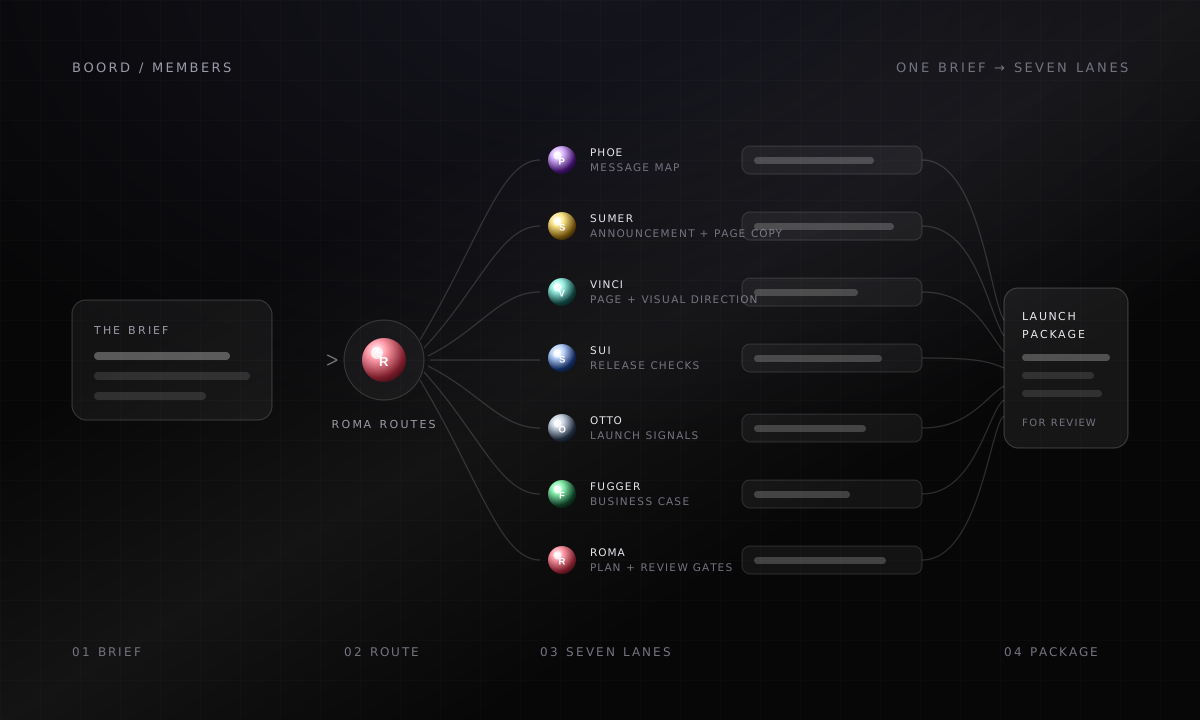
A launch is seven kinds of work wearing one deadline: a story to tell, words to write, a page to design, checks to run, numbers to watch, a budget question, and a plan holding it all together.
Most teams serialize that work through one exhausted person. Boord runs it as seven parallel lanes from a single brief, with Roma keeping the lanes honest with each other and with the company memory in Brain.
We launch the customer portal on the 24th. Build the plan and get every lane moving.
Plan drafted. Seven lanes, three review gates, and the two questions we need answered this week: who owns the portal welcome page, and whether onboarding docs are in scope.
- Drafted the launch plan across 7 lanes Done
- Scheduled the launch review for Tuesday Done
- Create the launch project with 23 tasks Waiting for your approval
Illustrative exchange. The plan fans out only after you approve it.
The seven lanes
Each Member owns the slice that matches their craft. The table is the actual division of labor, not a metaphor.
| Lane | Member | Deliverable | Your review question |
|---|---|---|---|
| Plan and gates | Roma | Timeline, owners, dependencies | Is the sequence realistic? |
| Market story | Phoe | Message map and audience angle | Is the promise true and sharp? |
| Words | Sumer | Announcement, page copy, emails | Do the claims survive scrutiny? |
| Look | Vinci | Page direction and visual assets | Does it feel like us? |
| Ship path | Sui | Release checks and rollback plan | What breaks if we are wrong? |
| Proof | Otto | Launch signals and dashboards | Will we know if it worked? |
| Business case | Fugger | Impact framing and scenario notes | Is the bet sized honestly? |
How the lanes converge
- Brief
You define the launch
What is launching, for whom, what changed, and what must be true on launch day. One brief, asked once.
- Lanes
Seven crafts in parallel
Every lane reads the same brief and the same company memory, so the outputs agree on facts, dates, and promises.
Roma Phoe Sumer Vinci Sui Otto Fugger - Gates
You approve in stages
Plan first, claims second, package last. Each gate is a short review, not a rebuild.
Human decides - Package
Ready for launch day
Everything a launch needs, agreeing with itself.
- Plan with owners and dates
- Message map and copy
- Release checklist
- Signals to watch after
Lanes run in parallel against shared memory; convergence happens at the review gates, not in a panicked final week.
Running the plan
Brief once, precisely
The quality of all seven lanes tracks the brief. Say what changed, who cares, and what you are afraid of. Roma will ask about anything load-bearing that is missing.
Approve the plan before the work
The first gate is cheap: a timeline, the lane assignments, and the open questions. Redirecting here saves rework everywhere downstream.
Review lanes as they land
Copy, page, checks, and signals arrive as drafts against the plan. You edit or approve each one; corrections update the shared memory so other lanes inherit them.
Launch from the checklist
Launch day runs from Sui’s checklist and Otto’s signals. Afterwards, the retro and the real numbers flow back into Brain for the next launch.
What this replaces
Not your judgment: the package ships only through your approvals. What it replaces is the coordination tax, the version drift between the page and the announcement, and the launch retro that starts with “what did we actually promise?” The next launch starts from the memory of this one.
Use-case FAQ
Why route one brief to seven Members?
Because a launch is seven kinds of work pretending to be one. Splitting the lanes keeps each piece sharp, and routing them from a single brief keeps the pieces consistent.
Do I have to brief each Member separately?
No. You brief once. Roma decomposes the work, routes each lane to the right specialist, and keeps the overall plan coherent while the lanes run.
What does the launch package contain?
Typically the plan with dates and gates, a message map, announcement and page copy, design direction, release checks, measurement signals, and the follow-up drafts for customers and the team.
Where do humans fit in the launch?
At the gates. You approve the plan before work fans out, the claims before copy locks, and the package before anything ships. Boord coordinates; your team decides.